
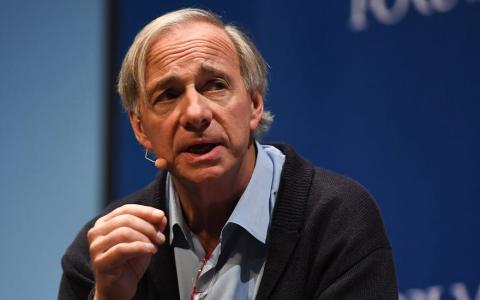

(Marketwatch) Ray Dalio, the founder, chairman and co-chief investment officer of the world’s largest hedge fund firm, Bridgewater Associates, has had a rough 2020. Bridgewater’s flagship fund has been deeply negative, even as rival hedge funds managed to outperform the market, particularly during the initial turmoil from the coronavirus pandemic.
Still, Dalio does have an enviable record in his four decades in the business, and he is as provocative as ever. In an interview with Barry Ritholtz, chief investment officer of Ritholtz Wealth Management, he alludes to the difficulties his firm has faced. “The pandemic took me by surprise. I figured I didn’t have an edge on the pandemic, and that was stupid,” he said.
Dalio and Ritholtz discussed portfolio construction at length. Bonds are too volatile relative to the tiny yields they offer — “one day’s price change is greater than one year’s yield,” Dalio said. Cash isn’t an alternative, either. “It doesn’t have the volatility to it, but what it does is — like now, it’s like a negative two percent a year,” he said, referring to inflation eroding its value. “So it’s this nonvolatile hidden tax at two percent a year. You look at the compounded effect of one or two or three percent per year on your life, and it is enormous.”
“Balance is the most important thing. So you don’t want cash, I think. I don’t think you want bonds, and I do think that you want alternative storeholds of wealth, but diversified wealth,” he said. By diversification, he means not just stocks, and different sectors, but also a diversification of currencies, and diversification of countries.
Gold, Dalio said, isn’t a good-return asset, but it has been an effective diversifier. Real estate, by contrast, isn’t a good store of wealth, because it isn’t liquid. Cryptocurrencies like bitcoin suffer from three problems — they are hard to transact, they are very volatile and they are at risk from governments banning them.
Dalio said next week’s election isn’t likely to get him to rethink his views of the economy. “If I was to take both parties we’ll have large deficits and monetization. Both parties will have an aggressive China policy, I think. But one party will be more capitalist and let’s say favor asset holders. One will be more left and favor redistribution,” he said.
The bigger issue, Dalio said, is whether the country can be brought together. Capitalists “understand productivity and so on, but they don’t know how to divide the pie that well. And socialists or those that are more of the left have a problem producing as much the increase in productivity.”
With six days left until the election, former Vice President Joe Biden has a 66% chance of beating President Donald Trump, according to London betting markets.
David Einhorn, founder of Greenlight Capital, says the top in the market was Sept. 2 and that the stock market bubble already is bursting.

