

The goal of tax optimization isn’t to avoid paying taxes, but to maximize your wealth on an after-tax basis. One key strategy to achieve this goal is tax deferral.
Unlike mutual funds and exchange-traded funds, which may pass along capital gains to investors annually due to portfolio manager decisions or the trades of other investors, Separately Managed Accounts (SMAs) give investors control over when to realize gains. This flexibility is a key benefit of tax management.
Tax management has two main components: tax-loss harvesting and deferring capital gains. Loss harvesting is straightforward—realized capital losses can offset other realized capital gains, potentially reducing taxable income. For example, assuming there are capital gains to be offset, multiplying your losses by your tax rate can provide an estimated tax savings. On the other hand, deferring capital gains allows your money to stay invested in the market longer, compounding over time. For instance, consider how $50,000 in tax savings could grow over 10 or 20 years, depending on market returns.
The Value of Compounding
| Annualized Market Return | $50k Tax Savings Invested in the Market Over… | |
|---|---|---|
| 10 Years | 20 Years | |
| 5% | $81,445 | $132,665 |
| 7% | $98,358 | $193,484 |
| 10% | $129,688 | $336,375 |
Source: Neuberger Berman.
It’s important to note that deferring taxes doesn’t mean avoiding them. While some investors may use strategies like passing securities through their estate to benefit from a step-up in cost basis or donating securities to charity, others will eventually pay taxes when withdrawing from their portfolio. However, even with a lower cost basis, a tax-managed portfolio can potentially achieve better after-tax results due to the compounding of market returns on more dollars staying invested rather than being paid to tax. For example, a $1 million portfolio that defers taxes for 30 years can significantly outperform one that pays taxes annually.
Waiting to Pay Taxes Can Boost Asset Growth
Hypothetical $1 Million 30-Year Investment at 10% Annual Return
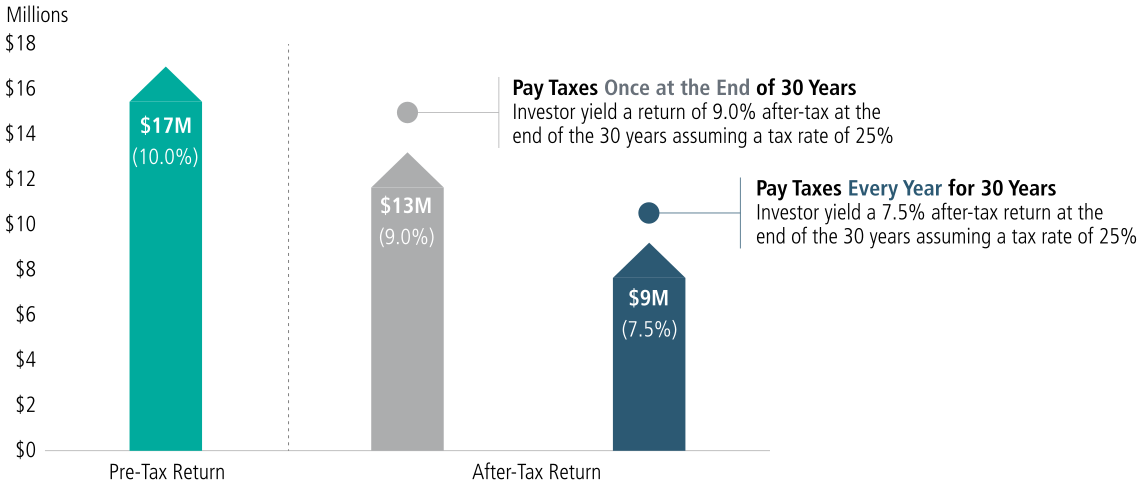
Source: Neuberger Berman. The 10% annual return roughly corresponds to that of the S&P 500’s total return from 1927 to 2024.
While the concept is simple, deferring gains and realizing losses requires careful monitoring to ensure the portfolio stays aligned with its target benchmark. In short, tax considerations should not overshadow investment objectives. A skilled implementation partner can effectively manage taxes in a portfolio, balancing specific tax goals with minimized impact on portfolio risk.
Takeaways
Tax optimization strategies, particularly systematically deferring capital gains and harvesting capital losses, are critical tools for maximizing after-tax wealth over time. By keeping more of your investment dollars in the market and allowing them to compound, you can unlock significant long-term value. While tax deferral does not eliminate tax obligations, it provides flexibility and the opportunity to manage when and how those taxes are realized. For investors seeking to enhance their portfolio’s efficiency, systematic tax management can be a powerful tool for achieving financial goals.
Related Content

Disruptive Forces in Investing | April 2025
It’s April: Time to Talk Taxes
- (17:57) Discover how tax-efficient strategies can unlock hidden value in volatile markets.

Article | February 2025
Hidden Value: Tax-Loss Harvesting in Up Markets
- Selling for tax purposes is not just viable during periods of market weakness.
Disruptive Forces in Investing | January 2024
What Tailor-Made Investing Looks Like
- (15:48) What does it mean to take a customized approach in investing?

