

(TheStreet) - Stanley Druckenmiller is a billionaire investor and former hedge fund manager who served as lead portfolio manager for George Soros’ Quantum Fund from 1988 to 2000.
Druckenmiller and Soros famously “broke the Bank of England” and reportedly generated more than $1 billion in profits by shorting the British pound sterling in 1992 in an event that came to be known as “Black Wednesday.”
After parting ways with Soros, he dedicated himself full-time on Duquesne Capital but closed the hedge fund in 2010.
Druckenmiller says U.S. dollar 'cleanest dirty shirt'
In a recent interview with Morgan Stanley’s Iliana Bouzali, Druckenmiller offered a blunt assessment of the U.S. dollar’s status as a reserve currency, calling it the “cleanest dirty shirt.”
The phrase perfectly captures the dollar’s dominant status in the global economy. Though it’s not flawless and has its challenges like value debasement, it’s widely accepted, stable, and trusted more than other global currencies. In short, the U.S. dollar is the best option among imperfect alternatives.
The veteran investor said the dollar is likely to remain the world’s primary reserve currency but he isn’t sure if that would the case even 50 years later.
“I don’t have a clue what would be. Maybe some crypto thing I hate.”
Skeptical of crypto as a store of value
When asked about crypto, Druckenmiller reiterated a long-held skeptical view of the asset class as “a solution looking for a problem.”
Despite that criticism, the billionaire acknowledged that cryptocurrencies have developed a powerful brand and investor following, which may help sustain their role as a store of value.
Stablecoins will transform payments in 10-15 years
While skeptical about crypto’s core premise, Druckenmiller struck a more optimistic tone on the underlying technology. He pointed to blockchain-based tokens and stablecoins as potentially transformative for global financial infrastructure.
A stablecoin is a type of cryptocurrency that tries to stabilize its value by being pegged 1:1 to the U.S. dollar. Since one USD-pegged stablecoin holds the same value as one USD, it is also called a "digital dollar."
In fact, U.S. President Donald Trump signed the Guiding and Establishing National Innovation for U.S. Stablecoins (GENIUS) Act into law last year to regulate USD-pegged stablecoins and cement the dominant status of the dollar as the global reserve currency.
Druckenmiller predicted that stablecoins or “digital dollars” could dominate payments systems in 10-15 years.
Stablecoins such as Tether’s USDT and Circle’s USDC are increasingly used for both domestic and cross-border payment settlements because unlike traditional financial rails, they don’t sleep over the weekends or holidays.
As per the onchain analytics platform DeFiLlama, the total stablecoin market cap stood at $315 billion at press time.
Billionaire investor ‘not a fan’ of tariffs
Druckenmiller also weighed in on trade policy, saying he generally dislikes tariffs but tolerates them at modest levels.
He argued that tariffs around 10% or less could function as a form of consumption tax shared with foreign producers, though he criticized the kind of ranges the Donald Trump administration has levied on imports from other countries.
Describing himself as a “Ronald Reagan old-school economist,” he admitted tariffs are fine but only “to a point.”
U.S. economy is ‘strong’
When asked to summarize the current state of the U.S. economy in one word, Druckenmiller had a one-word response, “Strong.”
The veteran investor, who once managed money for George Soros, still remains one of the most closely watched investors in global finance.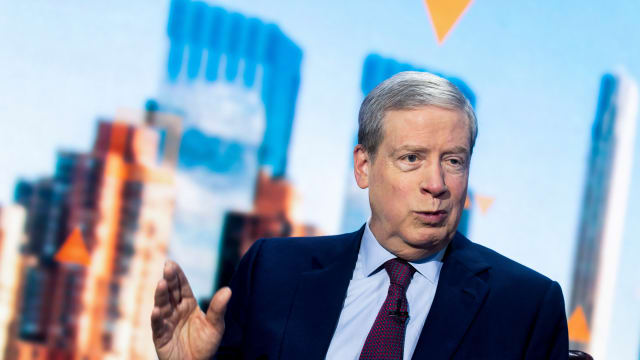
By Anand Sinha
Reviewed by Mehab Qureshi

