

Commentary on Wall Street Journal article The proliferation of drones is pitting privacy advocates against those who view the trend as the next frontier in aviation, and the Wall Street Journal asks two legal experts to weigh in on who should decide where the pesky but efficient machines are allowed to fly. Busy Skies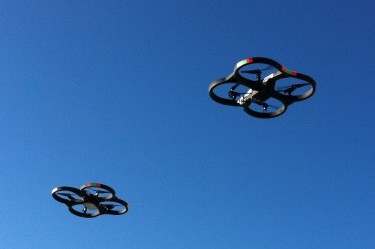 Drone sales, which have already reached 2.5 million this year, are expected to almost triple within the next five years, according to Federal Aviation Administration data the Journal cites. The skies are getting crowded. Privacy and Fourth Amendement Rights A. Michael Froomkin, professor of law at the University of Miami School of Law, tells the Journal that allowing drones to fly over private property would harm Fourth Amendment rights and impinge of the privacy as well as safety of the landowners. Currently, property rights extend to 500 feet above the property, after which the airspace is regulated by the FAA — and that’s how it should stay, Froomkin tells the publication. Otherwise, any voyeur, government agency or criminal would be able to spy on anyone, he argues. To allow for innovation, drones could be allowed to fly over public roads or enter private property for requested deliveries, Froomkin tells the Journal. Allowing for Innovation But property rights once extended infinitely above private property, Ryan Calo, an assistant professor of law at the University of Washington, tells the Journal. The U.S. government limited them to 500 feet to allow for the aviation industry to flourish, he says. Any decision over drone flight permissions should be made collectively to allow innovation in this new space, from product delivery and missing-person searches to holding companies and the police accountable for their actions, Calo tells the Journal. Source: The Wall Street Journal Posted by: The Trust Advisor

